How Stainless Steel Pipe Fittings Are Made?
Nov. 24, 2026
Stainless steel fittings — elbows, tees, reducers, crosses and caps — join pipes, redirect flow, change size and create branches. No single method makes them all. The route follows the part's geometry, size, grade, quantity and governing specification. Some start as seamless or welded tube, others as forged blanks, and some are built from plate and pipe. Buyers who understand the route can judge construction and specify more precisely.
Shapes that resist cold deformation are formed hot. Stainless is heated within a controlled temperature band, then pushed or pressed into shape with dedicated tooling — the established route for butt-weld elbows and reducers. The key is controlling metal flow to avoid wall thinning, uneven profiles and surface laps. A post-form heat treatment usually restores the required properties and corrosion resistance.
Cold forming works near room temperature, using presses and dies for good dimensional accuracy on smaller parts. The trade-off is work hardening and residual stress, making die design and the grade's forming limits critical for thick or complex stock. A later heat treatment restores the specified condition.
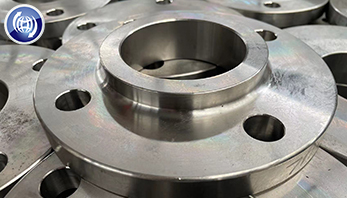
Forging shapes metal by compression — hammers or mechanical and hydraulic presses working a heated billet. It dominates socket-weld and threaded fittings, with the blank later machined to cut ends, bores and threads. Forging differs from swaging, a localized operation that reduces a section through repeated radial pressure.
Bending turns a tube without a separate elbow blank. Rotary draw bending pulls it around a die, mandrel bending supports it internally, and roll bending uses rollers for a gradual curve. Choice depends on diameter, wall thickness, bend radius and accuracy. It produces bent sections, not standard hot-formed butt-weld elbows.
Hydroforming uses pressurized liquid instead of a mechanical tool. A sealed tube is filled with fluid that expands selected zones against a die, forming branch outlets and hollow shapes — one route for certain tees. Pressure, material condition, die design and deformation sequence must be controlled. It is not universal; extrusion, pressing, welding and fabrication may suit a part better.
Large or project-specific pieces are cut, formed, fitted and welded from plate or tube, then machined to finish faces, bores, bevels and threads. Weld quality, dimensional accuracy, traceability and any required heat treatment or nondestructive examination must meet the order.
Finished fittings are checked against the specification and order: material identity and heat or batch traceability; outside diameter, wall thickness, centre-to-end distances and angles; surface condition for cracks and laps; heat-treatment condition and required tests; plus inspection records. ASTM A403/A403M covers wrought austenitic stainless fittings for pressure piping, accepting various starting forms and shaping operations while setting heat-treatment and testing requirements.
Selecting a fitting means more than choosing a shape. Route, material, dimensions and inspection must match the service. When ordering, state type, grade, size, wall thickness or schedule, connection, standard, quantity and inspection needs — and supply a drawing for non-standard parts.
 Previous:
None